Yelp | craftEd
Technical Craftsmanship
– Orchestrating design excellence at Yelp –
Where we started
What pops into your head when you first think of Yelp? We can tell you from countless user interviews that it probably has something to do with restaurant reviews.
That doesn’t surprise us. After all, we started our journey by spotlighting reviews to give people a platform for sharing their experiences with local businesses. And most of those experiences had to do with restaurants. Yelp’s early days had a lot in common with garage bands — we were small, focused, and full of ambition as we worked to establish ourselves in the industry.
The design evolution of Yelp’s app home from 2008 to present
These days, our product design organization is a vibrant ensemble of over 60 creative minds — designers, writers, and researchers — all jamming across different time zones and specialties to bring our vision to life. And we’ve expanded way beyond ratings and reviews.
Yelp now offers an exciting playlist of services, from food ordering and restaurant waitlists, to managing home projects, and helping local businesses find new customers. We’ve evolved to meet the diverse needs of our users.
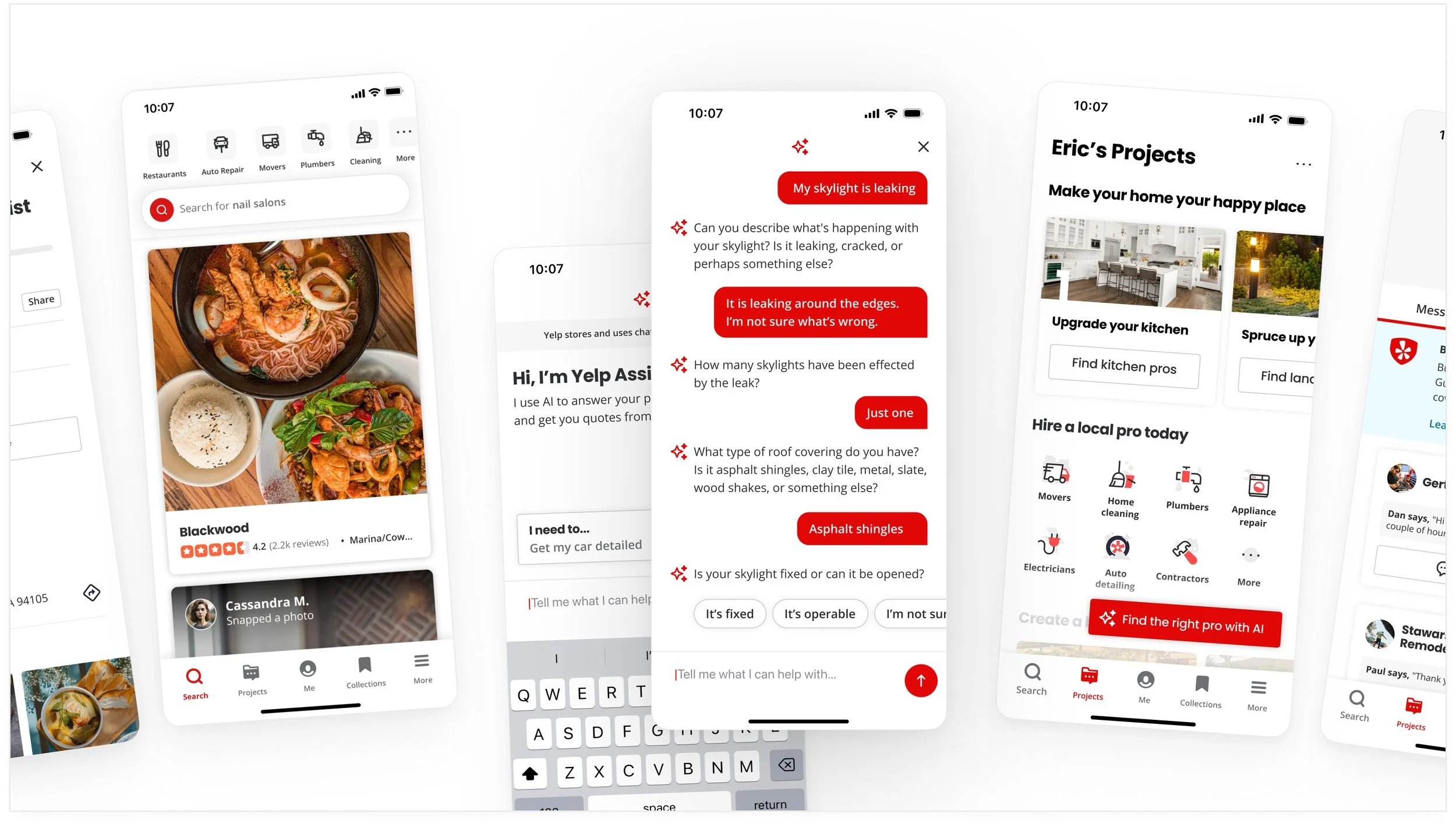
Yelp’s current design look and feel
Why we created the craftEd program
Continuous improvement is at the heart of everything we do at Yelp. We believe this is what drives great design. This belief is also what sparked the creation of “craftEd” in the first place. We designed this program to help our designers fine-tune their expertise. Using surveys and workshops, we pinpointed key growth opportunities within our product design organization and established three guiding principles:
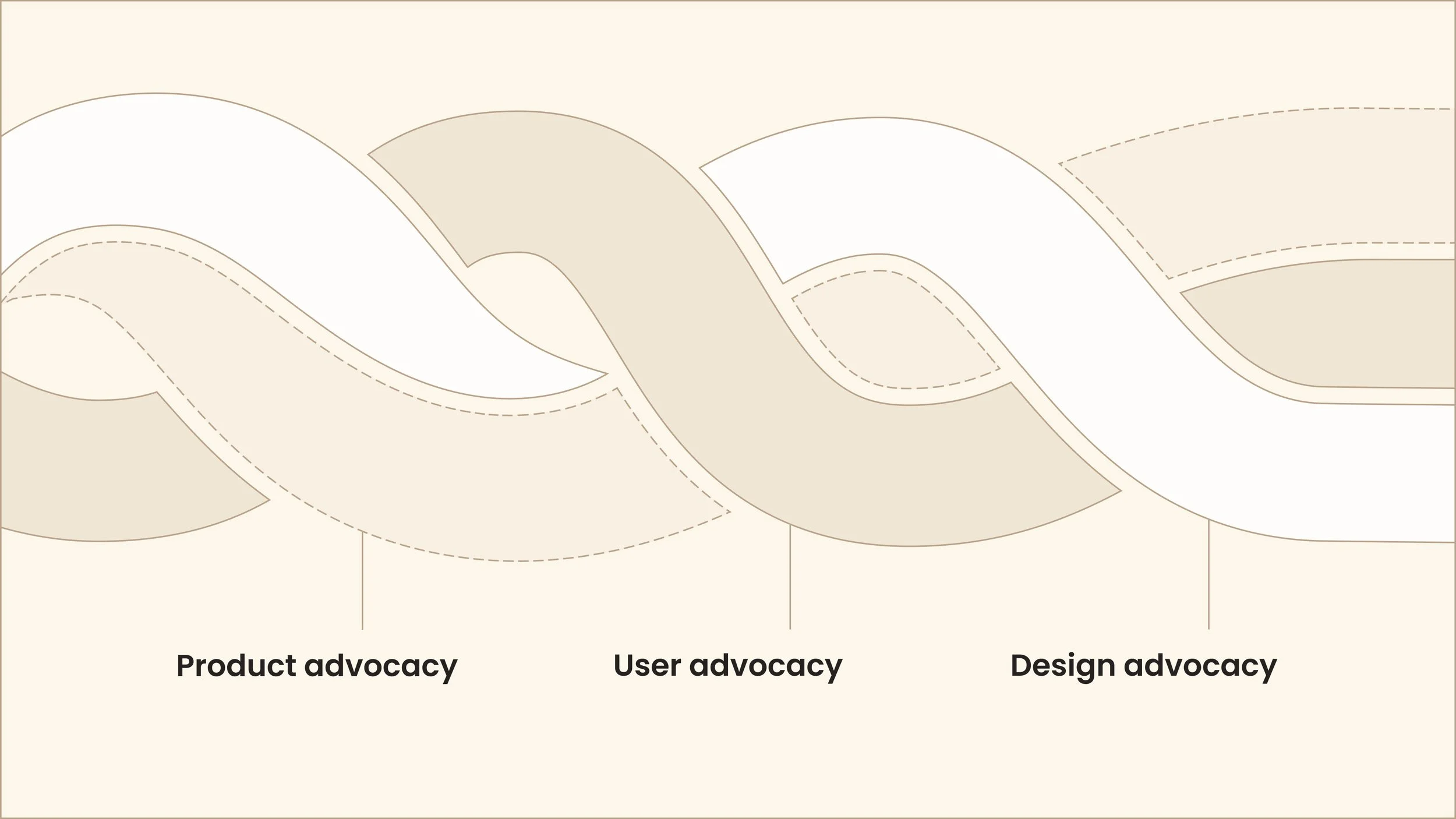
User advocacy: We actively listen to our users so that our designers have a deep understanding of their needs and pain points. We act on those insights with empathy to create solutions that closely align with user expectations.
Product advocacy: We collaborate with our cross-functional partners to create a shared vision for tackling design challenges. We then align our efforts with the overall project or company objectives to make sure any product decisions we make have a positive, unified impact.
Design advocacy: We work to continuously get better at what we do. This includes knowing how to use the latest tools, frameworks, and workflows in our design process to help us create designs that are precise, creative, and useful.
Course | Technical Craftsmanship
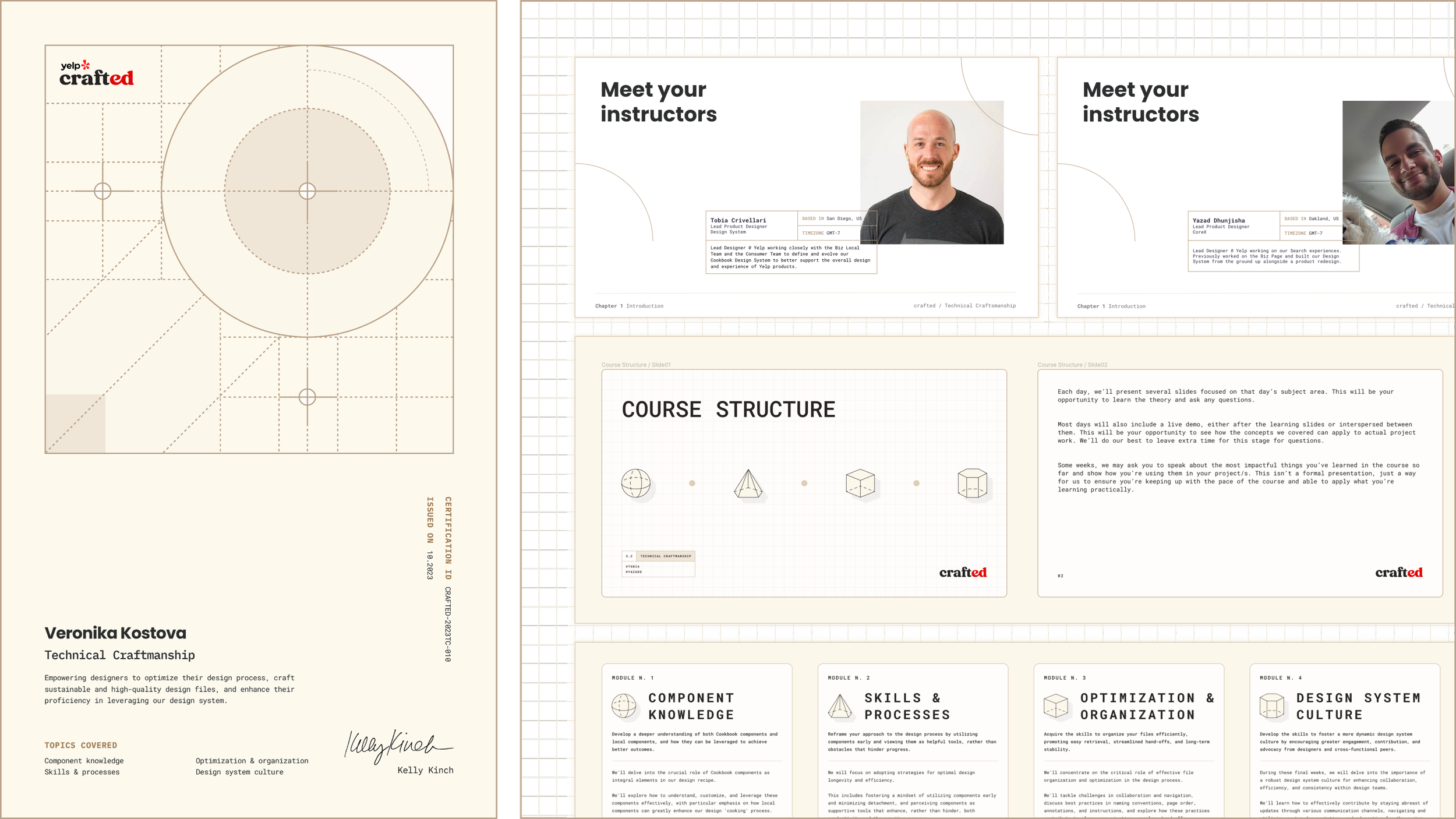
Empower designers to optimize their design process, craft sustainable and high-quality design files, and enhance their proficiency in leveraging Yelp's design system
Overview
Make a more significant impact across Yelp’s design ecosystem by learning how to optimize your design workflows and foster a vibrant design system culture. This course will show you how to refine your design process to produce high-quality, sustainable, and durable design files. You’ll improve your proficiency with the Cookbook design system and learn how to create a more dynamic and efficient design environment.
How it’s taught
Weekly 60-minute live virtual lectures and interactive workshops, over 8 weeks, mix of theory and practice. Along with practical assignments that apply to your daily work, you’ll get access to a Figma collection of useful tips and considerations to help you explore topics at your own pace. Open discussions will encourage designers and engineers to share their experiences and insights, and a dedicated Slack channel will help make it easier for you to continue those conversations beyond this course.
Application
The practical exercises and assignments in this course will help you apply what you’re learning to your ongoing projects, with a special focus on the efficient use of the Cookbook design system and the improvement of design workflows. In this way, you can put the theory and concepts you learn in this course to use in your daily design practice.
Growth opportunities
Deepen their understanding of both Cookbook components and local components, leveraging them to enhance design outcomes.
Improve their design process by learning how to integrate components early in the design process, viewing them as tools that help you get things done more effectively, not as barriers.
Learn to organize their files in a way that makes them easy to find, streamlines the handoff process, and maintains file structure integrity over time.
Promote a more engaged design system culture that encourages contribution, collaboration, and advocacy among designers and cross-functional team members.
Content
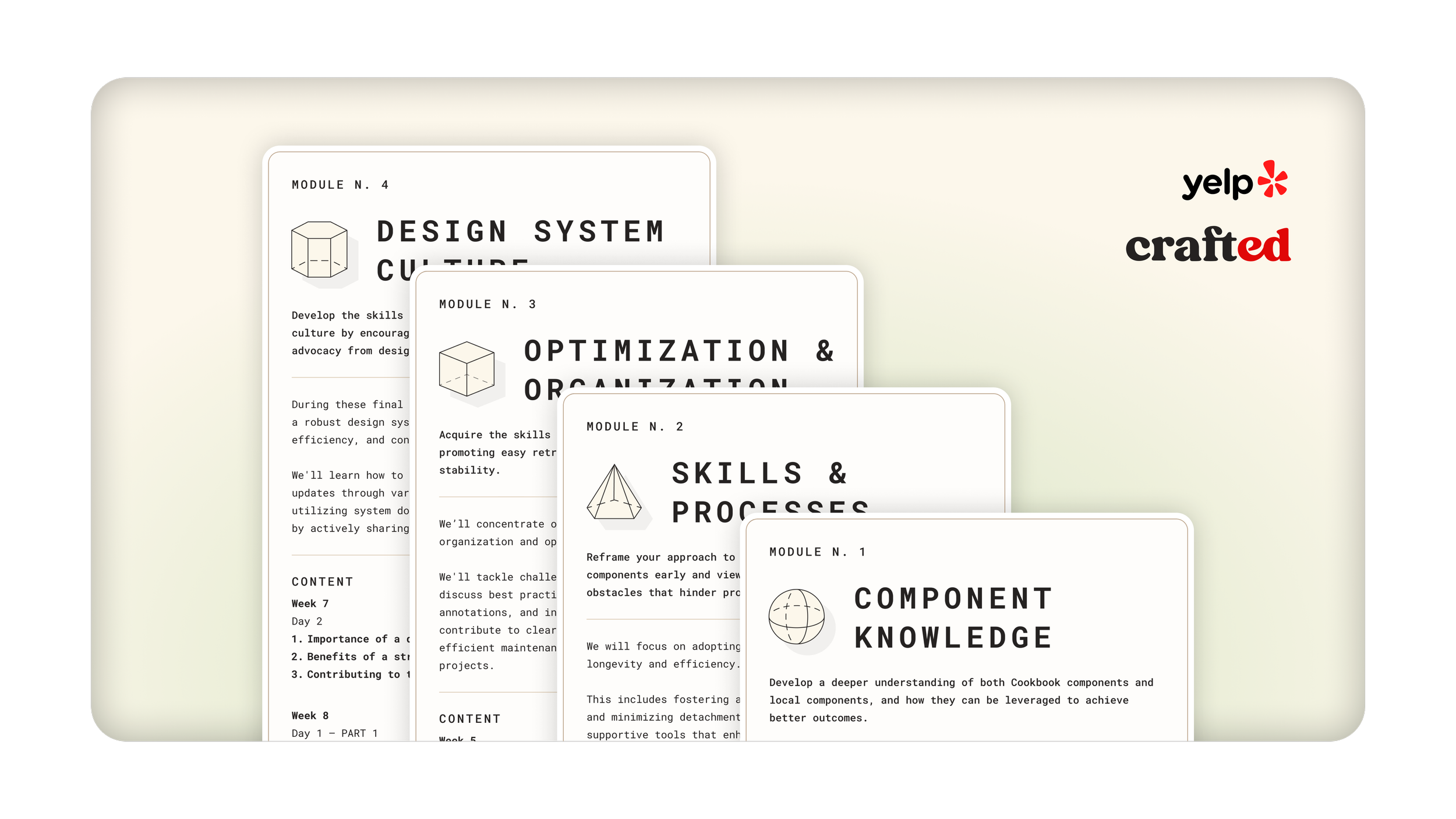
Module 1 | COMPONENT KNOWLEDGE
Develop a deeper understanding of both Cookbook components and local components, and how they can be leveraged to achieve better outcomes.
We'll delve into the crucial role of Cookbook components as integral elements in our design recipe.
We'll explore how to understand, customize, and leverage these components effectively, with particular emphasis on how local components can greatly enhance our design 'cooking' process.
Module 2 | SKILLS & PROCESSES
Reframe your approach to the design process by utilizing components early and viewing them as helpful tools, rather than obstacles that hinder progress.
We will focus on adopting strategies for optimal design longevity and efficiency.
This includes fostering a mindset of utilizing components early and minimizing detachment, and perceiving components as supportive tools that enhance, rather than hinder, both productivity and the creative process.
Module 3 | OPTIMIZATION & ORGANIZATION
Acquire the skills to organize your files efficiently, promoting easy retrieval, streamlined hand-offs, and long-term stability.
We’ll concentrate on the critical role of effective file organization and optimization in the design process.
We'll tackle challenges in collaboration and navigation, discuss best practices in naming conventions, page order, annotations, and instructions, and explore how these practices contribute to clear communication, seamless hand-offs, efficient maintenance, and future-proof updates of design projects.
Module 4 | DESIGN SYSTEM CULTURE
Develop the skills to foster a more dynamic design system culture by encouraging greater engagement, contribution, and advocacy from designers and cross-functional peers.
During these final weeks, we will delve into the importance of a robust design system culture for enhancing collaboration, efficiency, and consistency within design teams.
We'll learn how to effectively contribute by staying abreast of updates through various communication channels, navigating and utilizing system documentation, and advocating for the system by actively sharing knowledge with our peers.
This was an extract from Yelp’s article on Medium – if you’d like to read the full article, please click below.